
Gum disease is a sneaky condition that millions of people suffer from. It can start small, but if left alone, it can spell disaster for your oral health. Your dentist will have to break the news that you need professional treatment to improve your gums and prevent reinfection. This often comes in the form of scaling and root planing. What is involved in the process and how much will it cost? If you’re concerned about your budget, learn whether dental insurance can help.
What is Scaling & Root Planing?
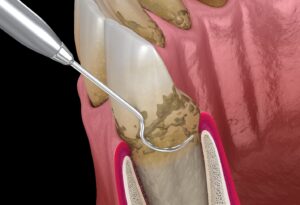
Scaling and root planing is a non-surgical gum disease treatment option that dentists use to remove plaque and tartar and encourage soft tissue reattachment. This two-part process, commonly known as a deep cleaning, starts with your dentist scaling your teeth and gumline. They will remove built-up plaque and tartar using specialized instruments and reach into the gum pockets to target existing bacteria.
The next step involves root planing. Your dentist will smooth the tooth roots to remove bacteria and encourage reattachment between your gums and teeth. Gum pockets will decrease over time, as will the chances of reinfection.
How Much Does Scaling & Root Planing Cost?
“I’m worried about the cost of treatment” is a common phrase many dentists hear. No one wants to pay high out-of-pocket prices for dental care, but not treating gum infection and inflammation can be even more problematic.
However, using your dental insurance might just be the key to reducing your expenses. Depending on your plan, gum disease treatment may be considered a major restorative solution. As a medically necessary procedure, your insurance company may cover around 50% of the total. The remaining balance is what you will be expected to pay.
If out-of-pocket costs are still too much, you can ask your dentist about financing options or if they offer an in-house savings plan.
How Do You Avoid Paying for Scaling & Root Planing?
Want to keep your money and avoid gum disease treatment? The only way is to prevent it in the first place! You can do this by:
- Brushing your teeth twice each day with a soft-bristled toothbrush, flossing once a day, and rinsing with a mouthwash designed to target gum disease.
- Seeing your dentist twice a year for checkups and cleanings.
- Wearing a nightguard if you grind your teeth at night.
- Limiting how much sugar and carbohydrates you eat.
- Ask your dentist about ways to reverse early signs of gum disease, such as bleeding, swelling, and tenderness.
Don’t take the risk and ignore your gum disease symptoms. If you need scaling and root planing, trust that it will give your smile the cleanup it needs, all without the heavy price tag.
About the Author
Dr. Joseph Ornelas earned his dental doctorate from Indiana University School of Dentistry; he later started Ornelas Family Dentistry in Crown Point. Using modern technology and his extensive experience, he can help patients suffering from gum disease get the care they need to enjoy better oral health. Think your bleeding gums need professional attention? Visit our website or call (219) 663–2892 to schedule an appointment.