
Dental Bridges – Crown Point, IN
Closing Gaps In Your Smile with Lifelike Restorations
Patients who are missing a single tooth or several consecutive teeth can essentially regain their pearly whites with strong and natural-looking dental bridges at Ornelas Family Dentistry. These prosthetics can be entirely customized to match your specific dental needs so that you can enjoy a more comfortable bite again. Dr. Ornelas uses high-quality, metal-free materials and works with only the best dental laboratories to exceed his patients’ expectations time and time again. If you’d like to explore your restorative options in further detail or would like to set up an appointment, contact our dental office today.
Why Choose Ornelas Family Dentistry for Dental Bridges?
- Highly Precise Customization For Optimal Fit & Feel
- Professional & Highly Experienced Dental Team
- Welcomes Dental Insurance & Flexible Financing
What is a Dental Bridge?
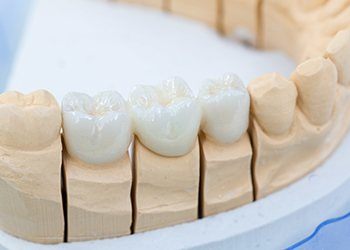
A dental bridge is customarily a prosthetic consisting of several parts: two dental crowns attached via pontics, or artificial teeth. The crowns will be cemented to the natural teeth on either side of the gap, which will need to have their enamel altered to make room for your restorations. The pontics will be able to replace one to three consecutive teeth at best. With proper care and visiting Dr. Ornelas every six months for checkups, your dental bridge can likely last a decade or more before needing replacements.
Types of Dental Bridges

Dental bridges can come in various shapes and sizes so that they can match each patient’s unique smile and dental needs. Our team can provide two kinds of bridges—traditional and implant-retained ones. Here’s a brief look at each option so that you know what to expect:
Traditional Dental Bridge
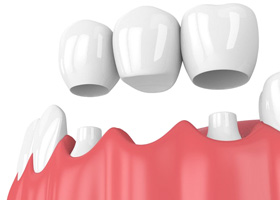
The traditional bridge involves two dental crowns that will be bonded to your adjacent, healthy pearly whites on the sides of the space in your smile. The pontics will cover the top of your gum line and we’ll make any necessary adjustments so that your results look as natural as possible. This option is typically reserved for patients who are missing one to three teeth in a row.
Implant Bridge
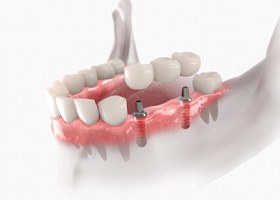
Instead of utilizing the natural teeth on either side of the gap, we can place dental implants into your jawbone to support your dental bridge. This treatment can take several months to complete for osseointegration to finish, but you can be sure to enjoy a more stable and longer-lasting foundation for your bridge. The titanium posts can easily go as far as several decades to the rest of your life with proper care, and you won’t have to alter your natural teeth to support the bridge.
The Benefits of Getting a Dental Bridge

With this restorative treatment, you can be sure to appreciate various benefits for your smile and oral health, such as:
- A personalized restoration that can blend seamlessly with the rest of your smile
- Prevention of dental shifting due to tooth loss
- A complete and comfortable smile
- An enhanced bite force
- Improved confidence and self-esteem
- A restoration that can last 15+ years (traditional) or several decades (implant bridge)
Dental Bridges FAQs
Can You Take a Dental Bridge Out?
While you may have heard of “removable bridges,” this is actually a misnomer sometimes used for partial dentures that must be removed every day for cleaning and maintenance. Dental bridges are designed to remain fixed within your mouth for many years after placement, so you should never be able to remove your appliance without the assistance of a qualified oral health professional such as Dr. Ornelas. If you find that you are able to remove your appliance without the help of a dentist, please contact our office in Crown Point so we can repair or replace the device as necessary.
Is Getting a Dental Bridge Painful?
Receiving a dental bridge may be an excellent way to preserve your comfort in the long run by preventing oral health issues like dental drift and gum injuries. When you come to our office in Crown Point to receive your customized dental bridge, we’ll begin the process by applying an appropriate anesthetic to ensure your comfort. While the procedure used to place the device should be completely painless, the teeth that receive the crowns that support a traditional bridge may be sensitive for several days afterward. This temporary discomfort can usually be managed with over-the-counter pain medication until it goes away on its own, but please contact our office if your pain seems to be getting worse or if you notice signs of infection like swelling, redness, fever, chills, fatigue, or a foul taste in your mouth.
If you are receiving an implant bridge, you may experience some soreness after having the device placed, but you can minimize this discomfort by adhering to the detailed aftercare instructions we will be sure to provide you with.
How Long Should a Dental Bridge Last?
A dental bridge that receives excellent care can last between five and fifteen years, but the overall lifespan of your device will be determined in part by the material it is crafted from. Metal bridges may last slightly longer than metal-free ones, but the difference is often negligible, and those that replace teeth in the back of the mouth may not last as long since they endure more stress during the chewing process. The most important factor in the lifespan of your dental bridge is how well you take care of it by practicing excellent oral hygiene, visiting Dr. Ornelas regularly for routine exams and cleanings, and avoiding bad habits like smoking, excessive alcohol intake, using your teeth to open packages or bottles, and chewing on inedible items like ice, wood, plastic, metal, and fingernails.
Dental bridges supported by implants often last longer than traditional appliances since they are anchored directly to the jawbone. While the restoration itself will have to be replaced eventually, the implants holding it in place may last for decades or possibly life if they are properly cared for.
Can Dental Bridges Get Cavities?
Dental bridges cannot develop oral infections like cavities since they are not made from organic enamel. However, the teeth or jawbones supporting them can still be destroyed by harmful oral bacteria, so it’s crucial to keep up with a proper hygiene regimen that will keep your mouth healthy. Be sure to brush, floss, and use antibacterial mouthwash every day while visiting our office every six months for routine checkups. If the teeth or jawbone structures supporting a bridge are compromised by oral infection, we may have to remove the device so we can perform restorative work, and it may be necessary to replace it afterward.
How Soon Can You Get a Bridge After a Tooth Extraction?
After a tooth extraction, your gums and jawbone must heal. If a dental bridge is placed too loon, it could end up not fitting properly in the long run. The duration of the healing process can vary on the state of your oral health, but for most people, it takes between eight and twelve weeks. If you are getting an implant bridge, you may be able to have the implants placed right away after your tooth extraction. However, to do this, it is crucial that you have enough healthy jawbone mass to support your implants.
Are Dental Bridges Covered by Insurance?
Yes – dental bridges usually receive partial coverage. However, the level of coverage can vary between different providers and plans. Most dental plans consider dental bridges to be a major procedure, so they will typically cover approximately 50% of the cost. Of course, this isn’t set in stone, and you also need to meet your annual deductible and not exceed your maximum.
Do Dental Bridges Feel Natural?
Within a few days of receiving your permanent dental bridge, it should start to feel increasingly natural. Dental bridges are made from durable materials that can stand up to everyday chewing forces just as easily as tooth enamel, so eating with a dental bridge shouldn’t feel strange. The reason that your dentist reshaped your abutment teeth was to ensure that the bridge would fit comfortably in your mouth. Additionally, every dental bridge is customized based on impressions taken of your tooth. Ultimately, your bridge shouldn’t feel uncomfortable or even noticeable!
How Many Teeth Can a Dental Bridge Replace?
Depending on the patient’s needs, a dental bridge can replace anywhere from one to four missing teeth in a row. However, in most cases, dental bridges are used to replace just one or two teeth. However, in most cases, bridges are used to replace only one or two teeth. The longer the bridge extends, the less stable it might become. This is especially the case if the natural teeth supporting the bridge aren’t strong and healthy. It can be risky to have a bridge replace three or more teeth.