
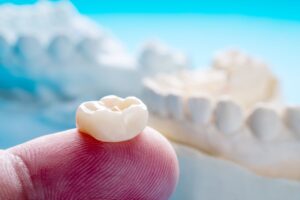
If you have a severely injured or decayed tooth or recently underwent a root canal, your dentist will likely want to place a dental crown to prevent it from sustaining additional damage or developing disease. These tooth-shaped caps are customized to fit over the affected tooth so that you can continue using it to eat, speak, and smile confidently.
But it’s natural to have questions about these restorations, like what they’re made from. Continue reading to learn more about the options to help determine what type of dental crown might be best for you!
What Were Dental Crowns Historically Made From?
In the past, most dentists relied on metal dental crowns containing gold, silver, copper, or platinum. These are often mixed with other non-precious but durable materials, such as nickel, cobalt, chromium, and titanium, to improve their durability and longevity.
Although these covers can withstand the daily pressure of biting and chewing, they can also potentially be problematic. For instance, they trigger sensitivity or metal allergies in some patients, can expand and contract with changes in temperature, and can make teeth look dark or dirty. Today, many dentists use various tooth-colored options to rebuild injured teeth instead of metal.
What Are the Options for Tooth-Colored Dental Crowns?
Over the past few decades, advances in dental materials, technology, and techniques have allowed dentists to provide tooth-colored restorations for more lifelike results. These often last as long as metal crowns, blend beautifully into your smile, and are less likely to cause discomfort.
These are often made from resilient ceramics, including:
- Porcelain. This is a popular option because the material can be color-matched to your enamel and is strong enough for daily biting and chewing.
- E-Max. These crowns are carved from a solid block of lithium disilicate, which is more translucent than standard ceramic, making it ideal for highly visible front teeth.
- BruxZir® Solid Zirconia. This high-strength material resists chips, cracks, and stains, and is often recommended to shield damaged teeth in patients with bruxism, or chronic teeth grinding.
Which Material is Right for My Dental Crown?
It’s natural to wonder which type of dental crown is right for you, but only your dentist can recommend the best option for your unique circumstances. Different factors that might affect the decision can include the severity of the damage to the affected tooth, where in your mouth it’s located, whether you grind your teeth, your dental insurance policy, and your overall budget.
To learn more about the materials your dentist uses for restorations, contact them today to schedule a consultation!
Meet the Author
Dr. Joe Ornelas enjoys taking the time to get to know his patients so he can deliver customized treatment plans to meet their unique needs. He earned his dental doctorate from the Indiana University School of Dentistry, and today, he uses state-of-the-art technology to deliver a full range of services, including tooth-colored dental crowns. If you have a damaged or decayed tooth requiring treatment, you can request an appointment on the website or call the office at (219) 663-2892.